



Safe Drinking Well Water Starts at Home
August 2026
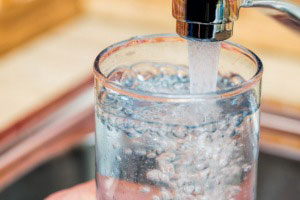
Did you know that 36% of Chester County residents rely on private wells for their drinking water? Nearly 45% of Pennsylvanians have never tested their well water. Clean well water requires monitoring by the well owner.
Charlestown Township's Environmental Advisory Committee recently hosted two well-attended presentations on Safe Drinking Water from Wells, featuring Beth Yount, Master Watershed Steward Coordinator and Soil Expert with Penn State Extension.
Ms. Yount's presentations highlighted an important fact: If your home is served by a private well, spring, or cistern, you are responsible for the safety of your drinking water. Unlike public water systems, private wells are not monitored by municipal or state government and PA has no statewide requirements for testing or maintenance of existing wells. County, state, and federal groundwater-monitoring networks provide information about aquifer levels and broader groundwater conditions. These networks do not test an individual household well and generally do not determine water quality at a specific residence. In Chester County, the Chester County Health Department administers requirements for well permitting, construction, inspection, and initial approval.
Protect Your Well and Your Family's Health
Experts recommend that homeowners:
- Test well water every year through an accredited laboratory because water quality conditions can change. Home testing kits have limited capabilities and cannot detect many contaminants.
- Test water after any repairs to the well, changes in taste and odor, nearby spills, fires, or land disturbance activities.
- Have wells professionally inspected every 10 years.
- Keep the area around the wellhead clean and accessible.
- Replace older well caps with newer sanitary well caps to keep out insects, rodents, and surface water.
- Inspect the well casing for cracks or corrosion.
- Avoid fertilizers and pesticides within 100 feet of the well.
- Ensure the ground slopes away from the well to prevent standing water.
- Use activated carbon, reverse osmosis, and ion exchange systems that can help filter well water.
Know What's in Your Water
Groundwater can be affected by local geology, hydrology, nearby septic systems, stormwater runoff, agricultural practices, and cumulative environmental contaminants such as PFAS ("forever chemicals"). PFAS are found in many consumer products including clothing, food, food packaging, and heat and water resistant materials. Because they persist in the environment and do not easily break down, they leach into the soil, eventually reaching aquifers, the source of many private drinking water supplies. There are thousands of PFAS compounds and professional testing may not be available and if available, may be very expensive. Through the workshop that was offered on this topic, Penn State, with funding by a grant from the PA Department of Health and the Centers for Disease Control, offered free testing to 20 Charlestown residents of a number of common PFAS through their university lab (which is not State accredited for PFAS testing). Charlestown met criteria for participation because of its large number of wells that residents rely on for drinking water. The concern was the lack of regular monitoring and regulatory oversight for private water systems, and their detection of PFAS compounds, most commonly exceeding state and federal drinking water standards, in 47 PA counties.
For more information on private well maintenance, water testing, and groundwater protection, visit:
- Penn State Extension resources on testing your drinking water
- PA DEP's information on PFAS and water testing
- Chester County Health Department for information related to wells, permits, inspections, testing, disinfection, and laboratory resources
- Chester County Water Resources Authority for information about groundwater levels, watershed conditions, water-quality reports, and mapping