


East Goshen Tests Curbside Composting with New Pilot Program
November 10, 2026
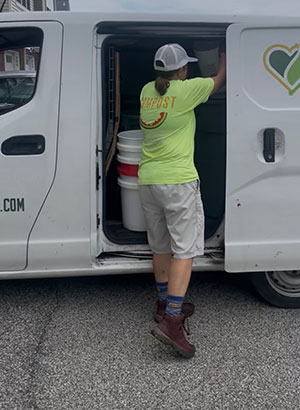
East Goshen Township launched a curbside composting pilot program in August to provide residents with an easy and affordable option for food waste disposal. The five-month pilot offers food scrap collection to participating households, with the Township providing guidance and paying for half the cost. A local compost hauler, Back to Earth Compost Crew, provides each household with a five-gallon bucket and collects food scraps every other week for composting.
The program was developed by East Goshen's Environmental and Sustainability Advisory Council (ESAC) following efforts to gauge community interest in composting. An article in the Township newsletter generated 80 survey responses, which found that most respondents were willing to pay $10 per month for curbside collection, but interest dropped considerably at $20 – the full cost of the service. Based on these results, the Township agreed to cover half the monthly cost, with participating households paying $10. A follow-up educational class provided information about curbside collection and backyard composting. Some residents chose to begin composting at home, while others enrolled in the pilot. The program currently has 41 participating households.
ESAC Chair Mary Krueger said participant feedback has been positive. Residents have reported that the service is easy to use and odor-free, and some have noticed a reduction in their household trash. The compost hauler estimates that each participating household contributes approximately 15 to 20 pounds of food scraps per pickup.
East Goshen found that surveying residents and offering an educational class helped establish interest before launching the service. Coordination with the Township's regular trash hauler was also important to ensure that compost buckets placed at the curb were not mistakenly collected with household trash.
With rising trash disposal costs, the Township sees composting as a potential way to reduce the amount of waste sent to landfills. At the conclusion of the pilot, East Goshen plans to review compost diversion data from the hauler and survey participants about their experiences. These results will help determine whether the Township continues or expands the program. Krueger noted that increasing participation could provide economies of scale and make the program more cost-effective.
East Goshen's experience offers a useful example and practical lessons for other municipalities interested in similar programs, especially the importance of assessing resident interest, evaluating costs, and testing the service through a pilot before considering broader implementation.